
The Growing Demand for High Quality Lifting Accessories

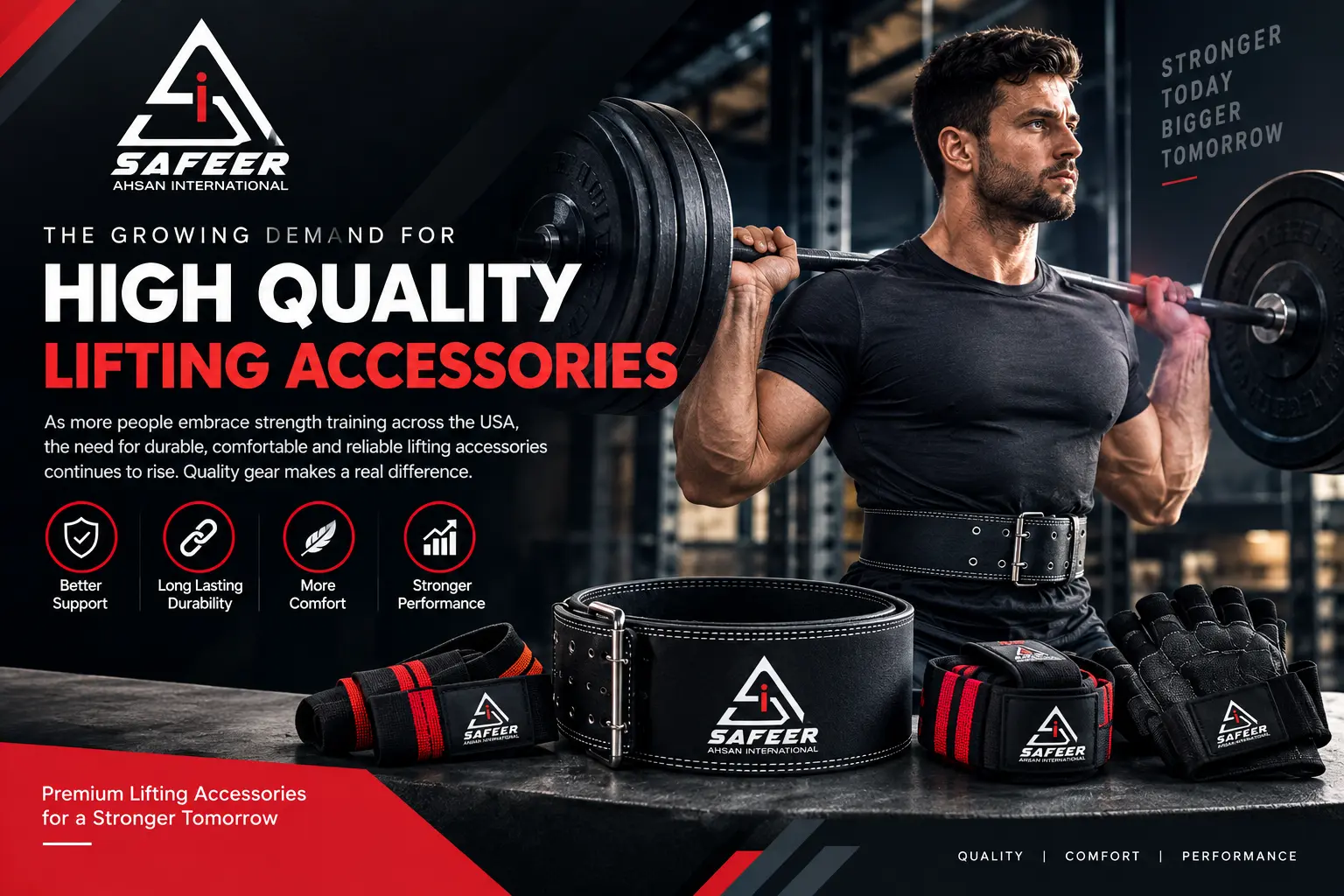
Strength training has become an important part of modern fitness. Across the USA, more people are building regular workout routines, joining gyms, training at home, and taking part in strength based sports. As training habits continue to evolve, the demand for dependable equipment that supports comfort, control, and performance is also increasing.
Among the many products used during strength training, lifting accessories have become especially valuable. Items such aslifting belts, lifting straps, wrist wraps, gym gloves, gymnastic grips, andknee supportcan help athletes feel more secure during demanding exercises and maintain a consistent training routine.
This growing interest has also encouraged gyms, athletes, fitness brands, and retailers to pay closer attention to product quality. Today, customers are not simply looking for equipment that looks good. They want products that feel comfortable, perform reliably, and are suitable for regular use.
Why Lifting Accessories Are Becoming More Popular
The popularity of strength training has created a wider market for practical training equipment. Beginners want simple products that make their workouts more comfortable, while experienced lifters often look for accessories that complement their established routines.
A major reason behind this growth is the changing attitude toward fitness. Training is no longer limited to professional athletes or competitive bodybuilders. People from different backgrounds now include resistance and strength exercises in their everyday routines.
Several factors are contributing to the increasing demand for lifting accessories:
• More people are participating in strength training
• Home gyms are becoming more common
• Athletes are paying greater attention to training comfort
• Gym members are looking for equipment that supports consistent workouts
• Fitness brands are expanding their product selections
• Customers are becoming more aware of product construction and durability
As consumers become more informed, they are also more selective about what they purchase.
Quality Matters More Than Ever
When an accessory is used during demanding training sessions, quality can make a noticeable difference in the overall experience. A poorly constructed product may feel uncomfortable or lose its effectiveness after repeated use, while a well made product can become a dependable part of a training routine.
Quality is especially important for accessories that are exposed to repeated tension, pressure, movement, and frequent handling. Customers want to know that the product they choose is designed with practical use in mind.
A high quality product should provide a combination of:
• Comfortable materials
• Strong construction
• Consistent performance
• Practical design
• Secure fitting
• Suitable support
• Long lasting usability
These characteristics help create confidence between the customer and the brand.
The Role of a Weightlifting Belt
A weightlifting belt is one of the most recognized accessories used during strength training. It is commonly used during exercises where lifters want additional support around the midsection.
The demand for this product has increased as more people become interested in structured strength workouts. Different users may have different preferences regarding materials, thickness, width, closure systems, and overall design.
For manufacturers, producing a dependable belt requires attention to several details. Stitching, materials, fastening systems, sizing, and overall construction all contribute to the final product.
A professional weightlifting belt manufacturer understands that a belt should be designed for practical use rather than appearance alone. Its construction should consider how the product will be worn, adjusted, and used during repeated training sessions.
What Customers Look For in Lifting Accessories
Modern customers have access to more information than ever before. Before purchasing a product, they may compare materials, construction, product photographs, reviews, specifications, and brand information.
This means manufacturers and suppliers need to focus on genuine product value.
Customers commonly consider:
Comfort
An accessory should feel comfortable enough for its intended use. Uncomfortable materials or poor fitting can make training less enjoyable.
Durability
Regular training can place considerable stress on equipment. Strong materials and careful construction can help products remain useful through repeated use.
Functionality
Customers want products that serve a clear purpose. A good accessory should be practical and easy to use during normal training sessions.
Fit
Proper sizing and adjustability can make a significant difference, particularly for belts, wraps, and support products.
Appearance
While performance remains important, customers also appreciate clean, professional designs that reflect quality and attention to detail.
The Importance of Reliable Products
When people purchase training accessories, they want confidence that the product will perform consistently. This is where reliable weight lifting accessories become important.
Reliability is not simply about how a product looks when it is new. It is about how well it continues to serve its purpose after repeated use.
For brands operating in the USA market, reliability can also influence customer trust. A positive product experience can encourage customers to return to the same brand when they need additional equipment.
Manufacturers can build reliability by focusing on:
• Carefully selected materials
• Consistent production standards
• Strong stitching and construction
• Practical product testing
• Accurate sizing
• Quality control at different production stages
• Attention to customer feedback
These practices can help businesses develop products that customers feel comfortable using regularly.
Why Product Design Continues to Evolve
The lifting accessory market is not static. Customer preferences continue to change, and manufacturers need to understand what modern users expect.
Some customers prefer lightweight designs, while others prioritize additional support and reinforced construction. Some want simple products with minimal adjustment, while others prefer customizable options.
This variety means there is no single design that works for every user. Successful product development requires an understanding of different training habits and customer expectations.
For example, a beginner may value ease of use, while an experienced lifter may pay closer attention to construction details, fit, and material quality.
This is why manufacturers continue to refine their products and introduce designs that combine practicality with comfort.
The Growing Role of Manufacturers
Behind every dependable lifting accessory is a manufacturing process that deserves attention. Product quality starts long before an item reaches a gym or home workout space.
A professional weight lifting accessories manufacturer needs to consider the complete production process, including material selection, design, stitching, finishing, inspection, packaging, and consistency.
Strong manufacturing practices can help brands provide customers with products that meet expected standards.
For USA buyers, working with an experienced manufacturer can also make communication and product development more efficient. Businesses may need specific materials, dimensions, colors, packaging, branding, or product specifications depending on their market.
A capable manufacturer should be able to understand these requirements and translate them into practical products.
Choosing the Best Weightlifting Belt for Your Needs
There is no universal belt that suits every person or every training style. When customers compare products, they should consider how the belt fits their individual requirements.
Important factors include:
• Material quality
• Overall thickness
• Width and sizing
• Closure mechanism
• Comfort during movement
• Construction quality
• Intended training use
• Adjustability
The best weightlifting belt for one person may not necessarily be the preferred choice for another. Personal comfort, training style, body shape, and individual preferences all matter.
Customers should therefore look beyond appearance and consider whether the product is genuinely suitable for their routine.
Lifting Accessories Are More Than Simple Equipment
A lifting accessory may look like a small part of a complete workout setup, but its role can be meaningful. The right accessory can make certain movements more comfortable, provide additional support, and help users feel more prepared for demanding sessions.
This is particularly relevant for people who train consistently. When an accessory becomes part of a regular routine, its comfort and durability become increasingly important.
A product that performs well during one session is useful. A product that continues to perform comfortably over many sessions can become a trusted part of someone’s training equipment.
What the Future May Bring
The lifting accessory market is expected to continue evolving as strength training remains an important part of fitness culture in the USA.
Future product development is likely to focus on practical improvements such as better materials, improved comfort, thoughtful sizing, stronger construction, and more user focused designs.
Manufacturers may also place greater attention on responsible production and efficient use of materials as customers become more interested in how products are made.
At the same time, brands will need to maintain authenticity. Customers increasingly value clear product information and realistic claims rather than exaggerated promises.
A strong brand is built through consistent quality, honest communication, and products that deliver a positive experience.
Final Thoughts
The growing demand for lifting accessories reflects a broader change in how people approach strength training. As more Americans incorporate resistance exercises into their fitness routines, the need for comfortable, durable, and practical equipment continues to grow.
From belts and wraps to grips and other training essentials, each accessory can have a specific role within a workout routine. Customers are becoming more knowledgeable and are increasingly interested in products that combine dependable construction with everyday comfort.
For manufacturers and fitness brands, this creates an opportunity to focus on genuine quality rather than simply following short term trends. A strong manufacturing process, thoughtful product design, consistent quality control, and customer focused development can help create products that people want to use repeatedly.
Ultimately, the future of lifting accessories will be shaped by products that understand what real users need. Brands that focus on quality, practicality, comfort, and consistency can build lasting relationships with customers while contributing to a better training experience.
As the USA fitness market continues to develop, the demand for dependable weight lifting accessoriesis likely to remain an important part of the industry. For businesses searching for a capableweightlifting belt manufactureror a dependable weight lifting accessories manufacturer, product quality and manufacturing consistency remain central considerations.
For customers, the goal is simple: choose products that match their training needs, feel comfortable in use, and provide dependable performance. For manufacturers, the responsibility is equally clear: create equipment that customers can genuinely rely on.
Frequently Asked Questions (FAQs)
1. What are lifting accessories used for?
Lifting accessories such as weightlifting belts, lifting straps, wrist wraps, gloves, grips, and supports are designed to provide comfort, support, grip, and control during strength training.
2. Why is the demand for high quality lifting accessories increasing?
The growing popularity of strength training, home gyms, bodybuilding, and athletic workouts has increased demand for durable and comfortable lifting accessories among fitness enthusiasts and athletes.
3. What should I look for in high quality lifting accessories?
Look for durable materials, strong construction, comfortable fitting, practical design, secure adjustment, consistent performance, and suitability for your specific training needs.
4. What does a weightlifting belt do?
A weightlifting belt provides support around the midsection during certain strength exercises. The right belt should offer a secure fit, comfortable construction, and appropriate adjustability for the user’s training routine.
5. How do I choose the right weightlifting belt?
Consider the belt’s material, thickness, width, sizing, closure system, comfort, adjustability, and intended training use. Your personal preferences and workout style should also guide your choice.
6. Why is durability important in lifting accessories?
Lifting accessories are often exposed to repeated tension, pressure, movement, and frequent use. Durable construction can help an accessory maintain its functionality and comfort over time.
7. What makes a reliable weight lifting accessories manufacturer?
A reliable manufacturer typically focuses on quality materials, consistent production, strong construction, accurate sizing, quality control, product testing, and customer requirements.
8. Are lifting accessories suitable for beginners?
Yes. Beginners can use appropriate lifting accessories when they understand their intended purpose and choose products based on proper fit, comfort, and their individual training needs.
9. What lifting accessories are commonly used for strength training?
Common options include weightlifting belts, lifting straps, wrist wraps, gym gloves, grip pads, gymnastics grips, knee sleeves, knee support, and head harnesses.
10. How can businesses choose a weight lifting accessories manufacturer?
Businesses should evaluate manufacturing experience, material quality, customization options, production consistency, quality control, product range, communication, and the manufacturer’s ability to meet specific requirements.
